5 signs your school is still running fees on paper
A lot of schools we talk to already have "a system" — usually an exercise book, a cash box, and a bursar who's very good at remembering who paid what. It works, until it doesn't. Here's how to tell if it's quietly costing you more than it looks like.
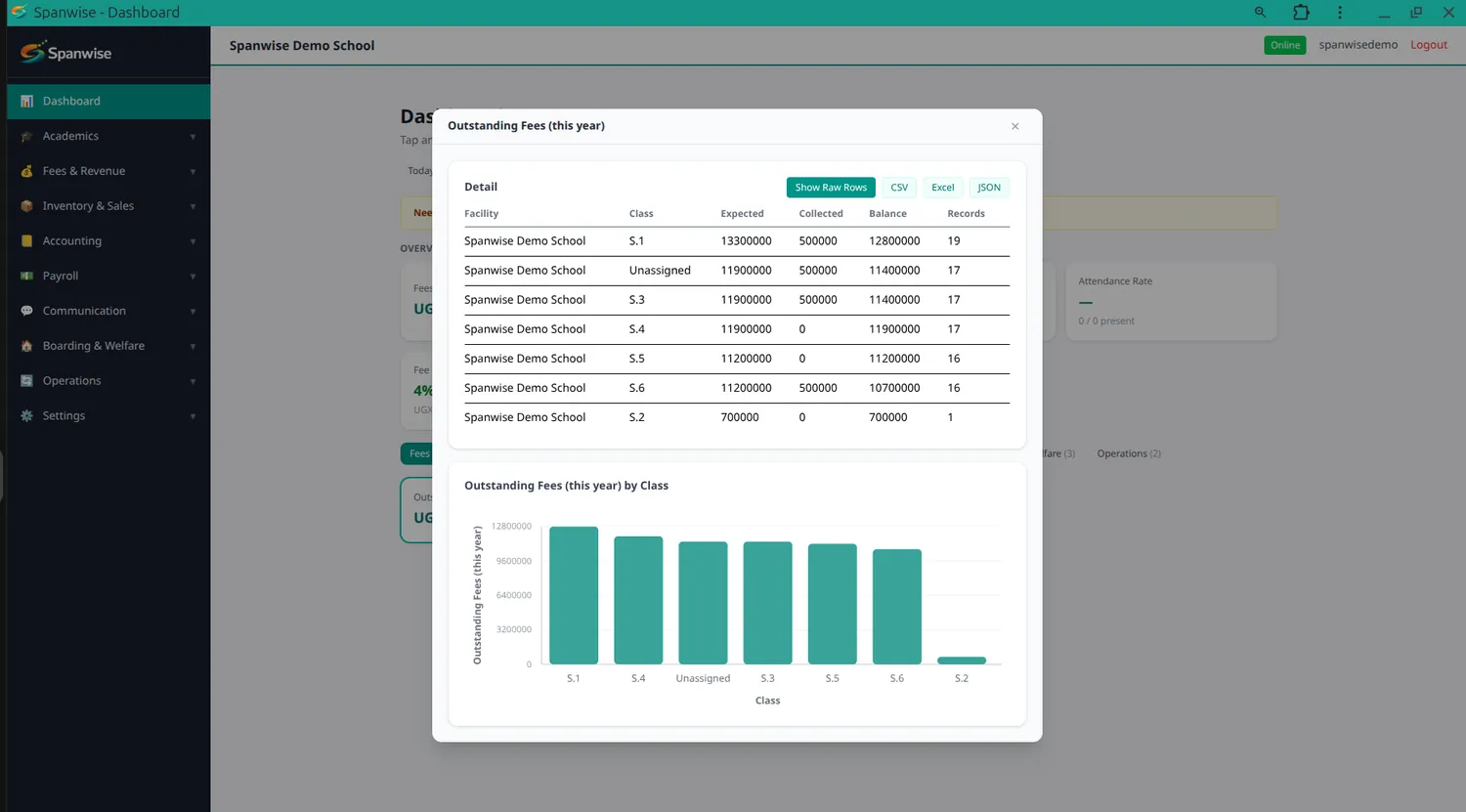
1. Arrears live in someone's memory, not a report
If the honest answer to "who owes fees this term" is "let me ask the bursar," that number exists in one person's head — not in a form you can hand to a head teacher or a board.
2. Report cards take a full week to produce
Manually copying marks from a register into a report card template, subject by subject, student by student, is where a small transcription error becomes a wrong grade a parent sees.
3. A transferred student's history doesn't move with them
When a student changes class mid-year, their fee balance and academic record should follow automatically — not require someone to remember to update three different books.
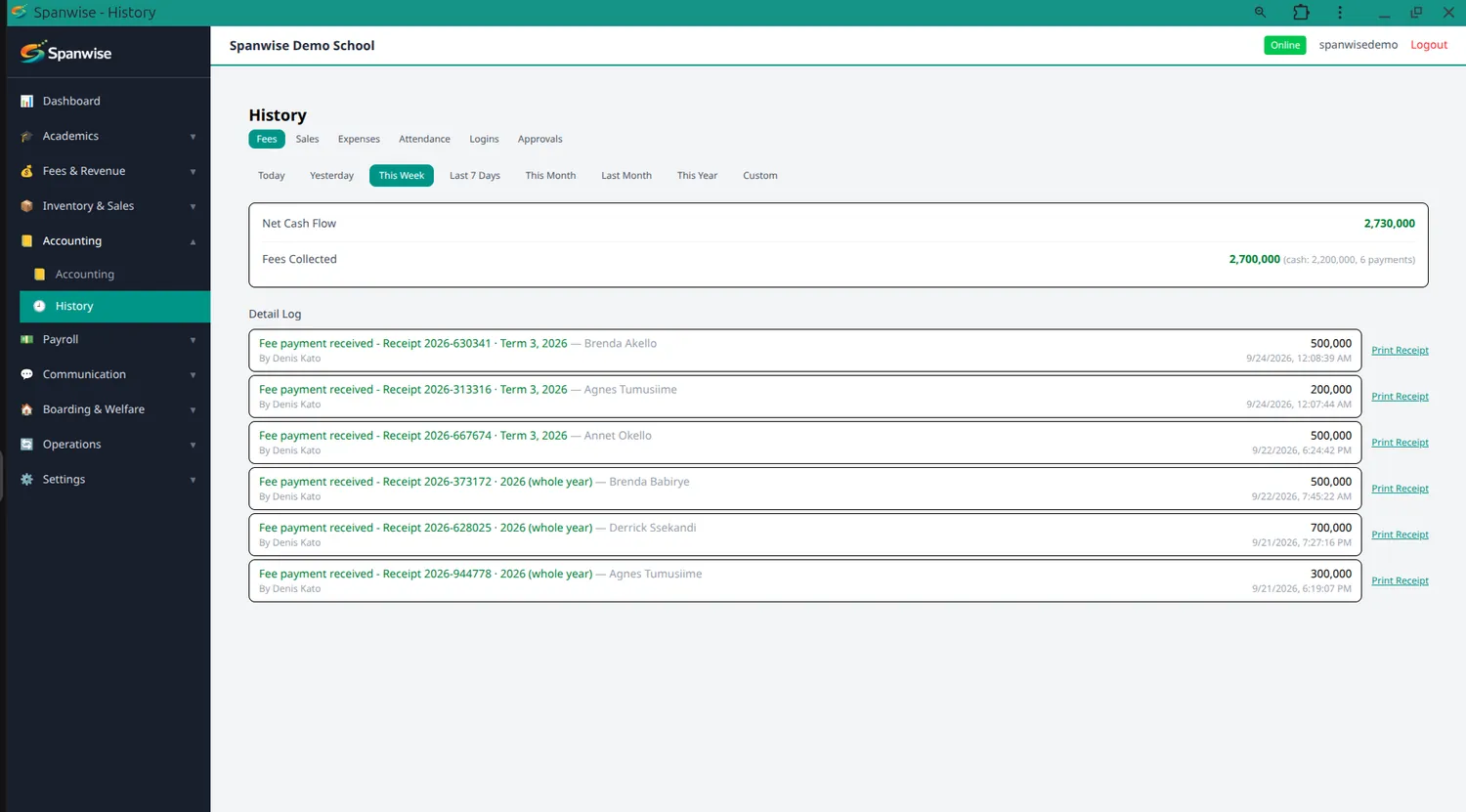
4. Mobile money payments get reconciled by hand
If a parent pays fees over MTN or Airtel Money and someone has to manually cross-check that against a paper receipt book at the end of the day, that's an hour of work that shouldn't exist.
5. "How are we doing this term?" takes a phone call, not a glance
Collection rate, arrears by class, attendance trends — if getting these numbers means someone stopping what they're doing to calculate them, decisions get made on gut feeling instead of what's actually happening.
None of these are a school's fault — they're what happens when general-purpose tools, or no tools at all, meet a job they weren't built for. It's exactly the gap Spanwise was built to close.